— Compliance →
Audit-ready is a state, not a scramble.
Most systems bolt a compliance module onto the same disconnected stores. Holonyx puts 21 CFR Part 11 in the schema: the record and its evidence are the same object, and the chain that proves it is verifiable end to end, on demand.
Illustrative output — the figures are an example. The endpoint is real: the chain is per-organization and independently verifiable, so an inspector can run it, not just read a claim about it.
The mechanisms
- 01
A permanent, tamper-evident history
Every change to a record is logged automatically — who, what, when, and the new value — and each entry is cryptographically linked to the one before it. Edit or delete an entry after the fact, and the break in the chain is immediately visible.
§11.10(e) - 02
Signatures tied to the exact thing they approved
A signature is bound to the exact content it signed off on. If that content changes afterward, the signature no longer matches — and the mismatch is flagged, not hidden. Who signed, what it meant, and when are stored with the record itself, not in a separate log that can drift out of sync.
§11.50 / §11.70 / §11.100 / §11.200 - 03
Approval status that updates itself
A batch record's status (green / yellow / red) updates the moment something relevant is signed — not on a fixed review calendar. It's always accurate, because nothing that feeds into it can change without leaving a signature.
periodic-review replacement - 04
Validation documents live in the same system
Your requirements, design specs, qualification protocols and reports, and deviations (URS, FRS, DQ/IQ/OQ/PQ, SVSR) are real records here — not PDFs in a separate folder — and stay traceably linked to exactly what they validate.
GAMP 5 aligned
— In the schema →
These rules are enforced the moment the system starts — before it accepts a single request. Integrity is not a runtime hope.
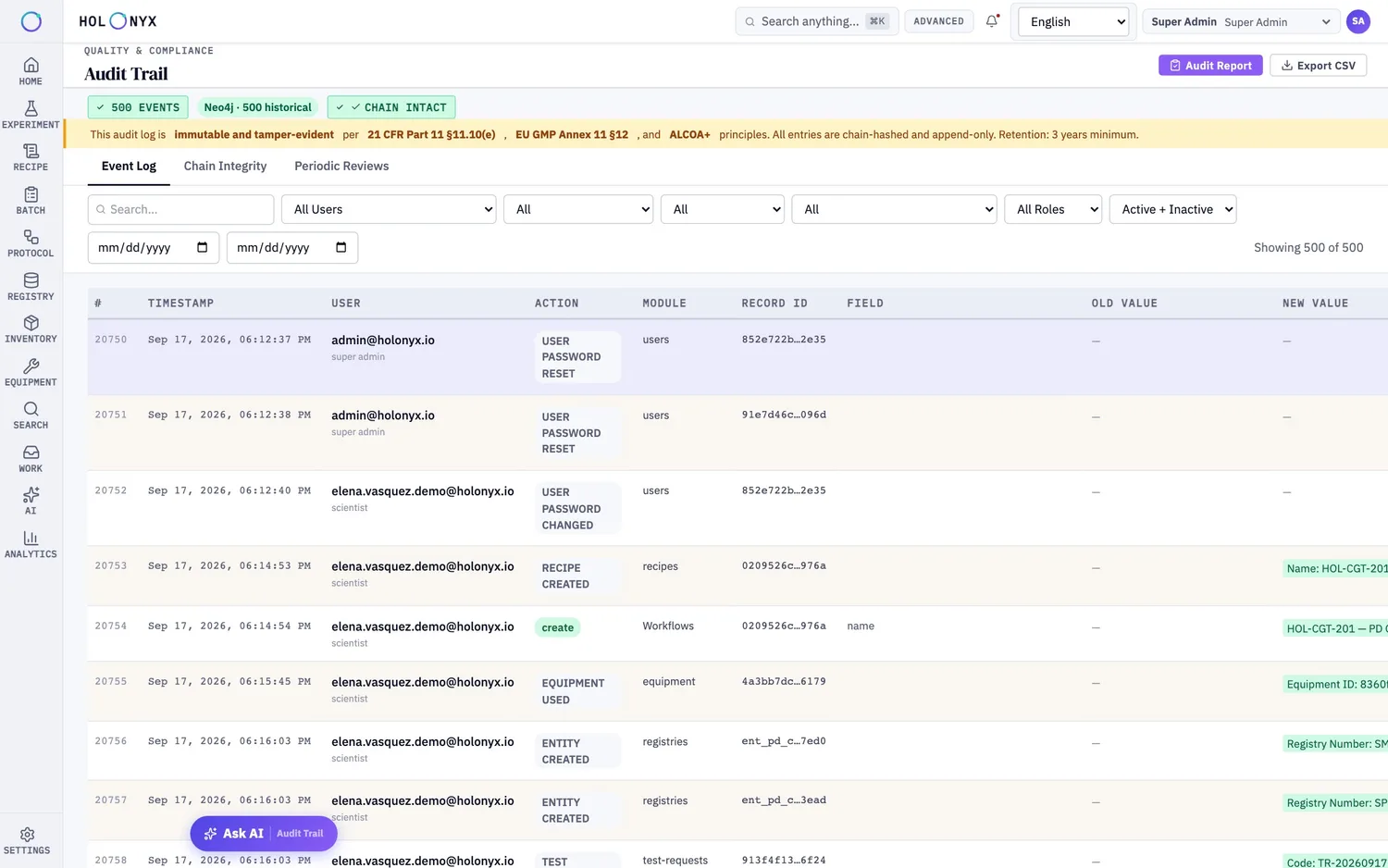
The audit trail
Append-only, hash-chained, verifiable on demand.
Every create, update, delete, sign, approve and export across every module is logged with user, role, IP and session — and the Chain Integrity tab recomputes the whole chain and reports any break.
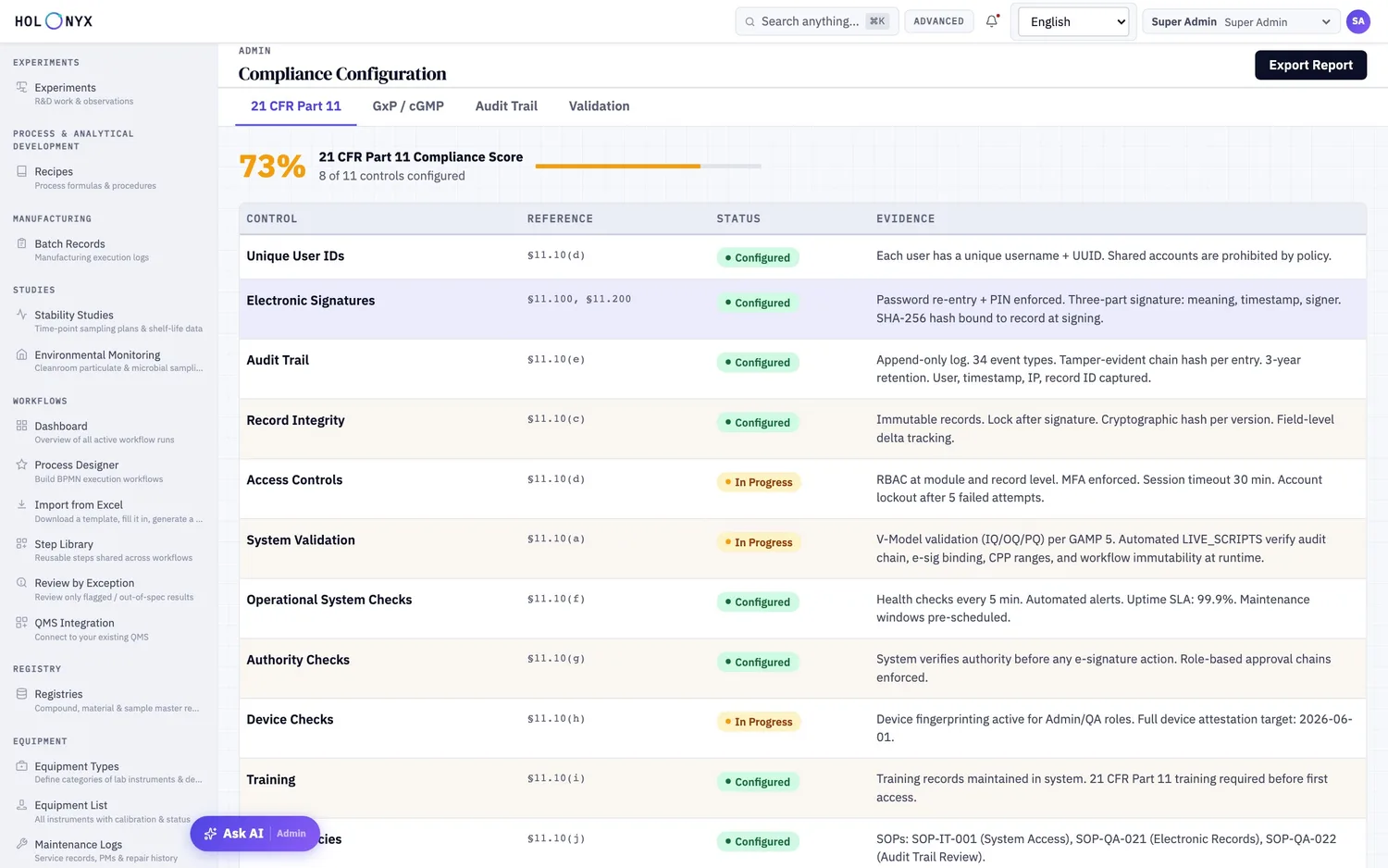
Part 11, control by control
Each control shows its configured status.
Unique user IDs, electronic signatures, audit trail, record integrity, access controls, system validation, operational and authority checks — with the evidence and the reference for each.
Validation
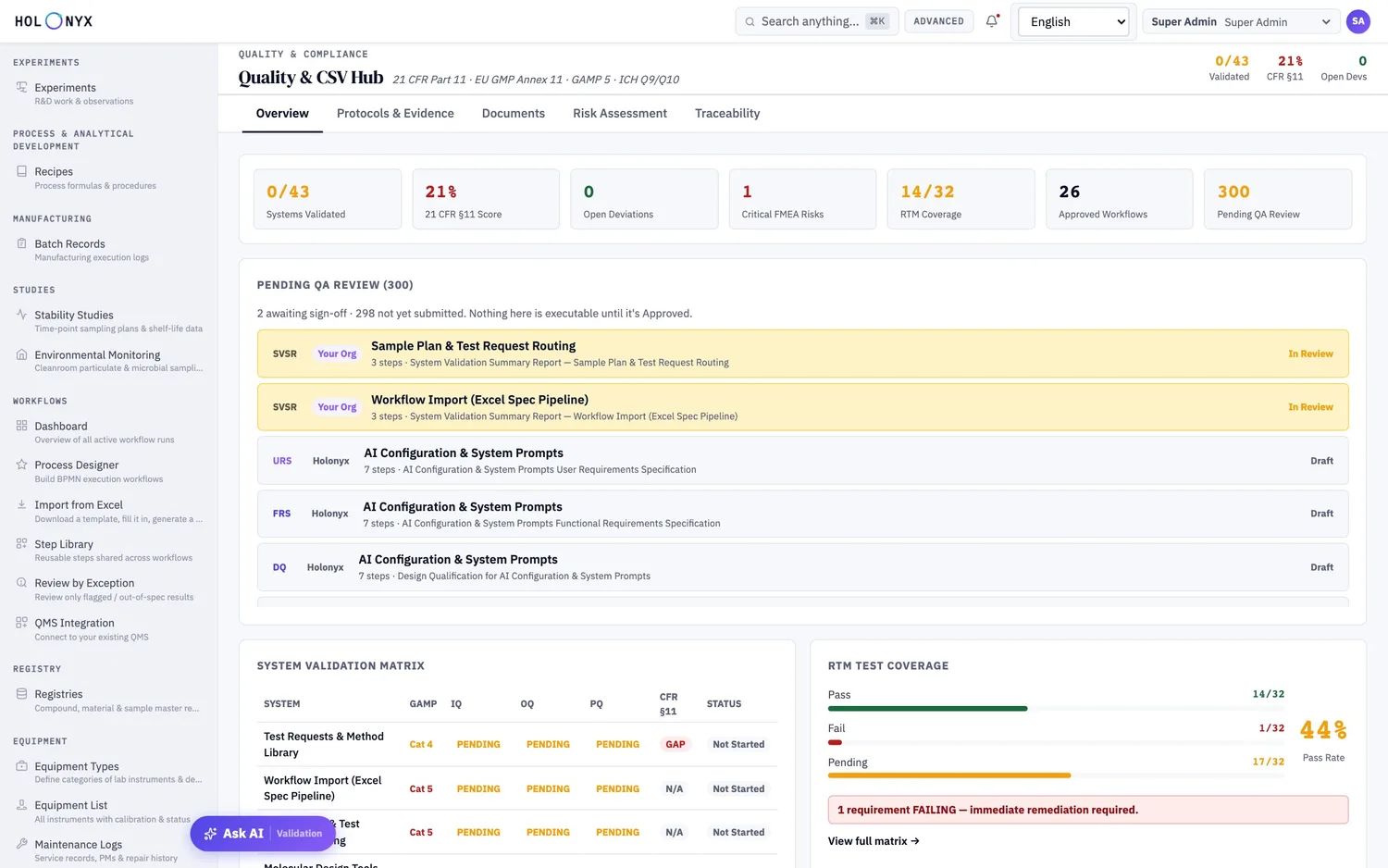
URS to SVR, tracked in the product, honest about where you are.
The Quality & CSV Hub tracks systems through the V-model with requirements traceability and an FMEA register. Approving a workflow, schema or result schema drafts the Performance Qualification protocol that qualifies the change. Nothing shows as validated until real qualification steps have run.
Documents
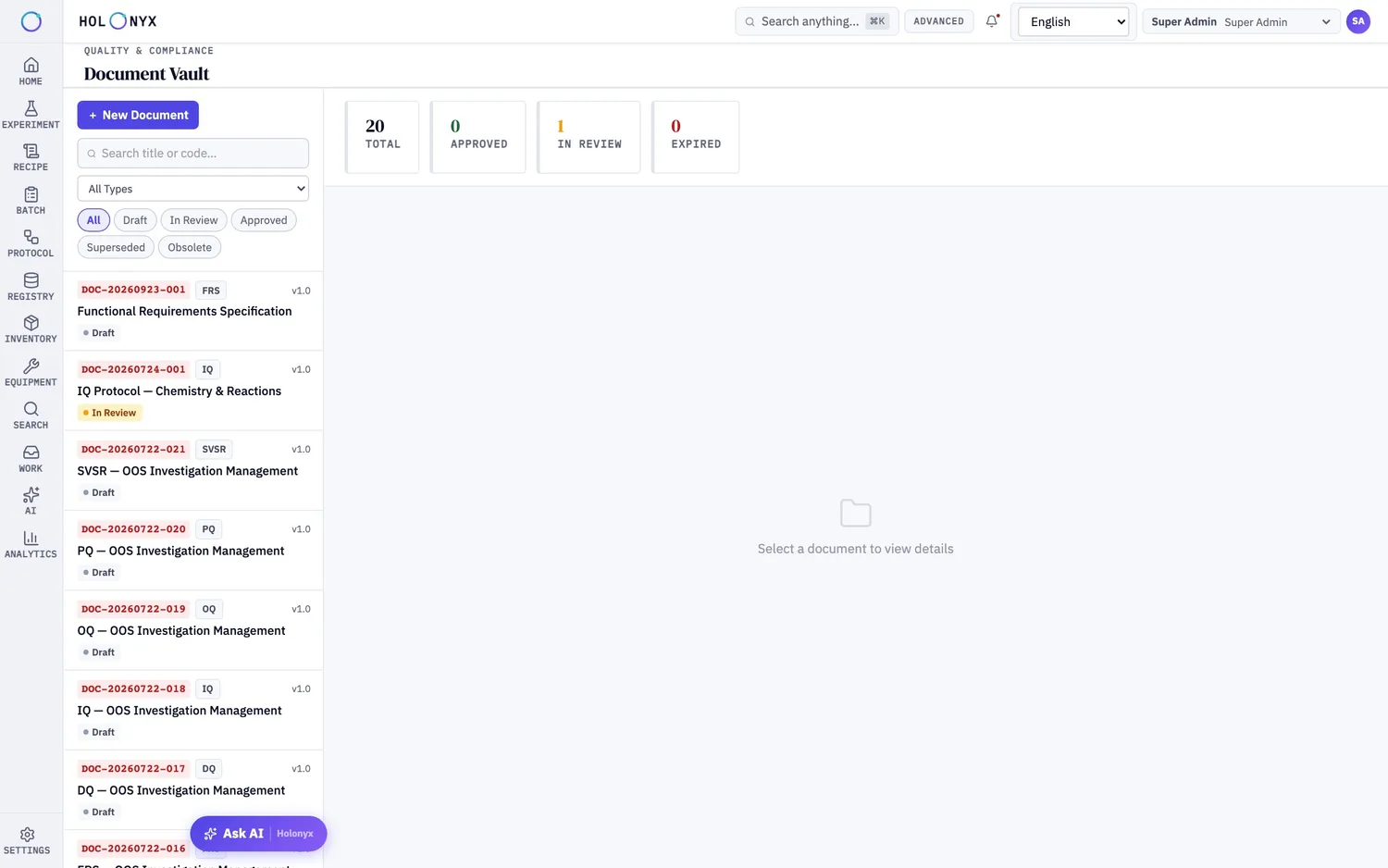
Evidence linked to the thing it proves.
Generated qualification documents live in the Document Vault with lifecycle status and link back to the protocol that produced them — no orphaned PDFs in a shared folder.
Bring your CSV lead to the walkthrough.
We will run verify-chain against a seeded org, sign a batch record, and show the qualification state move — live.
Book a walkthrough